
#03: Diamonds Dancing 💎
Diamonds, Lab-Grown Marvels, and the Revolution in Electronics

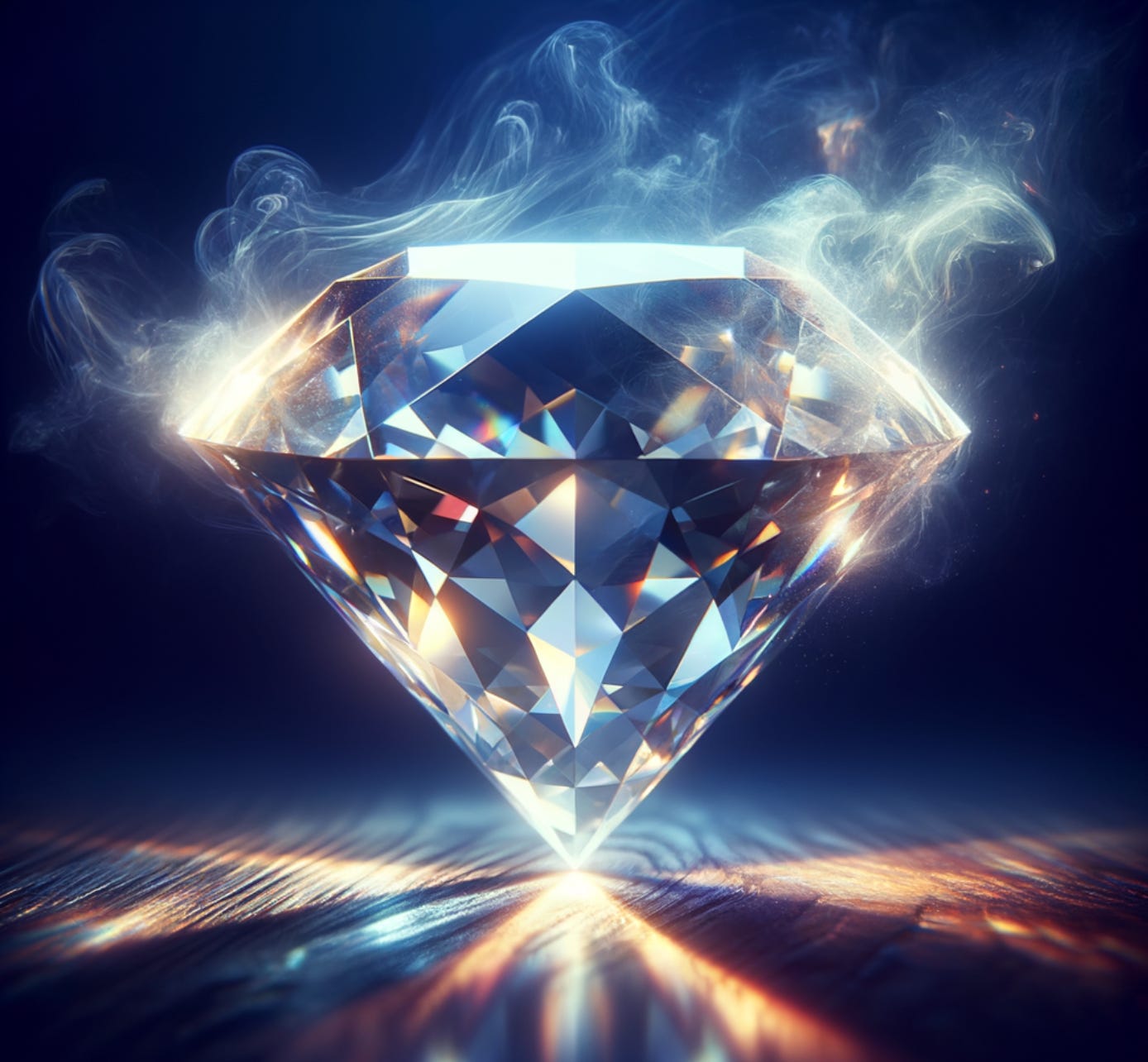
"Diamonds are like the hourglass of love, the sands of time that slowly wear away the rough edges, leaving a radiant gem that warms the heart."
— Tiffany Baker
Turbulent Evolution of Diamond Utility
The utility of diamonds uniquely evolved since their original purpose in the 3rd and 4th centuries in India. During these times diamonds were used to refract light, and engrave metals. This invigorating combination of strength and beauty made for undeniable versatility and proved itself to be a premium product on the historic paths of the famous Silk Road trading with Europe, Africa, and Asia.
Fast-forwarding to more recent times (1the 800s and on) has brought to light the dark side of the diamond trade, revealing unethical mining practices and regions where diamonds are found under dubious circumstances. Regions included Zimbabwe, South Africa, Angola, the Democratic Republic of Congo, and more. Unfortunately, young boys approximately between the ages of 5-17 have been exploited in but not exclusive to Guinea, Liberia, Sierra Leone, and Central African Republic. Constantly being exposed to large amounts of mercury and hazardous work conditions. These unethical mining tactics have raised extreme concerns about the environmental and human impact, drawing attention to the need for responsible sourcing and ethical practices within the diamond industry.
The Rise of Lab-Grown Diamonds
Tackling the first misconception. Lab-grown diamonds do not mean fake diamonds. Taking a gander at how they come to life, it’s important to note that a Lab-grown diamond is chemically and physically a diamond. It starts as a thin layer of a real diamond and is grown in a controlled and pressurized environment using technology replicating the natural diamond formation process. This results in a feel, look, cut, and hardness that is identical to a diamond that is found in the depths of the earth and later polished and cut.
Lab-grown diamonds have been received well by the market. Global sales for lab-grown diamonds increased to $12 billion in 2022, up 38% year over year. Setting up 2023 to be the year of the Lab-grown diamond. The Lab-grown diamond brand Brilliant Earth noticed a 15.7 percent net sales increase in 2022, to $440 million. Dorsey, another lab-grown jewelry brand, sold over a million stones in 2022. How? Lab-grow diamonds have grown in popularity for multiple reasons. Lab-grown diamonds are considered to be a better alternative to traditionally mined diamonds because they are considered an ethical luxury since they are made in a controlled environment. Lastly, the diamond cultivation process is environmentally friendly and involves fewer intermediaries in the journey from inception to the final product. Resulting in a reduction in price for the end consumer.
Cutting Edge Diamond Innovation
Looking through the next 10-20 years we’re seeing diamonds yet again, take on a different shape. Diamonds are reshaping the semiconductor landscape harnessing mindblowing efficiencies. With an astounding 90% increase in efficiency compared to silicon semiconductors, marking a transformative leap in performance. Harnessing a thermal conductivity 22x higher than silicon, diamonds excel at dissipating heat, mitigating common overheating challenges, and ensuring enhanced reliability in electronic devices. What sets diamonds apart is their exceptional ability to handle voltage, exhibiting a remarkable capacity of 50 times more voltage per 10,000 watts compared to silicon. This heightened voltage tolerance not only contributes to the development of more resilient electronic systems but also positions diamonds as a pivotal material for advancing technology.
In the semiconductor industry's relentless pursuit of innovation, diamonds emerge as an undeniable signal of progress. Diamonds offer unparalleled efficiency, superior thermal performance, and extraordinary voltage capabilities launching us into a new era of deep-sea exploration, high-voltage smart cities, cutting-edge interspace breakthroughs, and pushing the limits in state-of-the-art military technological advancements.
Which aspect of diamond innovation captivated you the most? In what ways do you envision the future of diamonds impacting industries and our daily lives?

Thank you for being part of the Fresh Embers newsletter today.
I’m Madala Mathurin and I write this newsletter in my free time once a week. If you want to support our community leave a comment, subscribe, or share with a friend. Till we reunite… Cheers!